Can Pigeons Eat Peanuts | Safe Feeding Tips & Guide
Many people who keep pigeons often ask the same question. Can pigeons eat peanuts? I hear this question a lot from new pigeon owners, especially from people who are just starting their first loft.
Peanuts are a common snack in many homes across the United States. Because of that, it is normal for pigeon keepers to wonder if they can share a few peanuts with their birds. At first glance, peanuts seem like a good food. They are natural, they contain protein, and many wild birds enjoy eating them.
From my own experience raising pigeons for years, I have learned that pigeons can eat a wide variety of grains and seeds. A healthy pigeon diet usually includes corn, wheat, peas, and different types of seeds. If you have already spent time learning about what pigeons eat, you probably know that pigeons do best when they have a balanced mix of foods.
Peanuts sometimes come up in feeding discussions because they contain a lot of energy. Some pigeon keepers even use them during colder months when birds need extra calories. But that does not mean peanuts should be fed carelessly.
Feeding the wrong type of peanuts or feeding too many can cause problems. New pigeon owners often make mistakes simply because they do not know the small details that matter when feeding birds.
Understanding whether pigeons can eat peanuts is important for several reasons. Good nutrition plays a big role in a pigeon’s health, breeding success, and daily activity. When pigeons receive the right food, they stay active, their feathers stay smooth, and they raise stronger young birds during the pigeon breeding guide stage.
Food also affects behaviour. Healthy pigeons are more alert and calmer in the loft. Poor nutrition can sometimes lead to weak birds that are more likely to develop issues related to pigeon diseases.
For beginners, learning proper feeding habits is one of the most important parts of pigeon care. It also helps you understand normal pigeon behaviour, since well-fed pigeons are more active and social.
Peanuts can play a small role in pigeon feeding if they are used correctly. The key is understanding when they are helpful and when they can cause problems. Over the years, I have tried different feeding methods in my own loft, and I have seen what works well and what should be avoided.
The good news is that peanuts can be used safely if you follow a few simple rules. Knowing those rules will help you keep your pigeons healthy and strong.
Main Explanation of the Topic
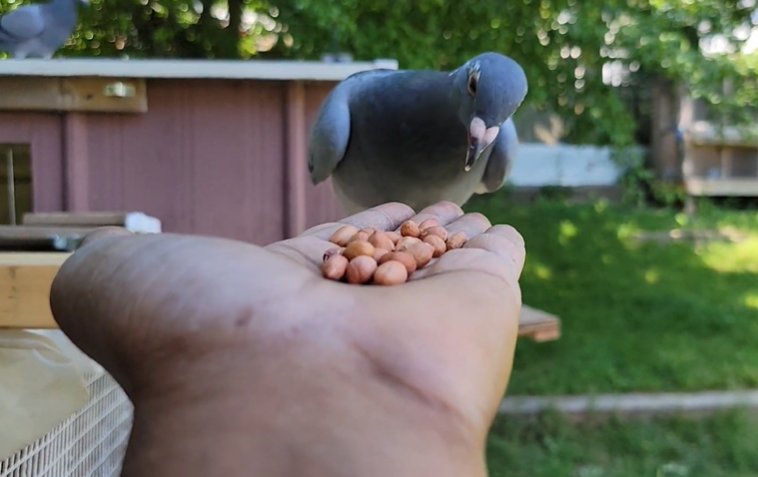
Many new bird owners ask the same question. Can pigeons eat peanuts? The simple answer is yes. Pigeons can eat peanuts, but they should only be given in small amounts and in the right form.
From my experience raising pigeons, peanuts can be a useful extra food. They are rich in protein and healthy fats. These nutrients can give pigeons extra energy, especially during cold weather or when birds are raising young.
However, peanuts should never replace a pigeon’s normal diet. Pigeons need a balanced mix of grains and seeds to stay healthy. In my loft, the main diet always includes corn, wheat, peas, and millet. If you have already read about what pigeons eat, you know that grains are the foundation of a proper pigeon diet.
Peanuts are more like a supplement or an occasional treat.
Why Peanuts Can Be Helpful for Pigeons?
Peanuts contain several nutrients that pigeons can benefit from when they are fed correctly.
First, peanuts are high in protein. Protein helps pigeons build strong muscles and healthy feathers. This is especially important during the moulting and breeding season.
Second, peanuts contain healthy fats. Fat provides energy for pigeons, which can be very helpful during winter. When temperatures drop, pigeons burn more energy to stay warm.
I sometimes add a few crushed peanuts to the feed during colder months. The birds enjoy them, and it helps keep their energy levels up.
Peanuts can also help during the pigeon breeding guide stage. Parent pigeons work hard feeding their young so that extra nutrients can support their strength.
Still, moderation is very important. Too many peanuts can lead to problems.
The Right Way to Feed Peanuts to Pigeons
One of the biggest mistakes beginners make is feeding whole peanuts or salted peanuts. This can be dangerous for birds.
When feeding peanuts to pigeons, always follow these simple rules.
First, the peanuts should be unsalted. Salt is not good for pigeons and can cause health issues if birds eat too much of it.
Second, the peanuts should be plain and natural. Avoid roasted peanuts with flavouring or seasoning.
Third, it is best to crush or chop the peanuts. Whole peanuts are large and can be difficult for pigeons to swallow. Smaller pieces are easier for them to eat.
Fourth, only give peanuts occasionally. In my loft, I treat peanuts as a small extra, not a daily food.
Usually, I mix a small amount of crushed peanuts into the grain mix once in a while. The pigeons pick them out quickly because they enjoy the taste.
How Much Peanut Is Safe for Pigeons
Pigeons do not need a lot of peanuts. A small quantity is enough.
If you are feeding a group of pigeons, a small handful mixed into their grain mix is usually plenty. Feeding too many peanuts can make pigeons gain excess weight.
Overweight pigeons may become less active, and this can affect normal pigeon behaviour. Healthy pigeons should move around the loft easily and fly well.
Balance is always the key when feeding pigeons.
When Peanuts Should Be Avoided
There are a few situations where peanuts should not be given.
If peanuts are mouldy or old, they should never be fed to pigeons. Mould can cause serious health problems and increase the risk of pigeon diseases.
Young pigeons that are just learning to eat should also be fed simple grains first. It is better to introduce other foods later once they are eating normally.
Always check the quality of the peanuts before giving them to your birds.
From years of keeping pigeons, I have learned that good food quality makes a big difference in bird health. Clean grains, fresh water, and a balanced diet will always keep pigeons in the best condition.
Tips and Common Mistakes
Over the years of raising pigeons, I have seen many beginners make small feeding mistakes. Most of the time, it happens because people want to give their birds something extra, but they are not sure what is safe.
When it comes to peanuts, a few simple habits can make a big difference. If you follow these tips, your pigeons can enjoy peanuts safely without causing health problems.
Tip 1: Always Use Unsalted Peanuts
One of the most common mistakes is feeding salted peanuts. Many peanuts sold in stores are meant for human snacks, and they contain salt.
Salt is not good for pigeons. Their bodies are very sensitive to it. Too much salt can stress their system and lead to health problems over time.
If you want to feed peanuts to pigeons, always choose plain and unsalted peanuts.
Tip 2: Break the Peanuts into Smaller Pieces
Whole peanuts are too large for pigeons to swallow. While some birds may manage to eat them, it is much safer to break them into smaller pieces.
Crushed peanuts are easier for pigeons to pick up and digest. In my loft, I usually crush the peanuts with my hand before mixing them into the feed.
Small pieces also help prevent choking problems.
Tip 3: Use Peanuts as a Treat, Not the Main Food
Pigeons need a balanced grain diet every day. Foods like corn, wheat, barley, and peas should always be the base of their meals.
Peanuts should only be an extra food.
Think of them as a treat that adds extra energy. Too many peanuts can make pigeons overweight, which can affect flying ability and normal pigeon behaviour.
In my experience, pigeons stay healthiest when peanuts are only given once in a while.
Tip 4: Pay Attention During Breeding Season
During breeding season, pigeons work harder feeding their babies. The parents produce crop milk and later feed softened grains to the young birds.
Some keepers like to add a small amount of peanuts during this time for extra nutrition. It can support the parents as they raise their chicks.
Still, balance is important. The main diet should always follow a proper pigeon breeding guide with a mix of grains and protein-rich seeds.
Tip 5: Always Check for Mould
This is a very important rule.
Peanuts can sometimes develop mould if they are stored in a humid place. Mouldyy peanuts can be dangerous for birds and may lead to serious pigeon diseases.
Before feeding peanuts, check that they smell fresh and look clean. If you see any dark spots or smell anything unusual, throw them away immediately.
Common Feeding Mistakes to Avoid
Here are some mistakes that many new pigeon owners make.
- Feeding too many peanuts at once
- Giving salted snack peanuts from the kitchen
- Feeding whole peanuts without crushing them
- Using old peanuts that have been stored too long
- Replacing regular grains with peanuts
Pigeons need variety in their diet. If you have already learned about what pigeons eat, you know that grains are always the most important food source.
Peanuts should be a small addition to that balanced diet.
FAQ Section
Can pigeons eat raw peanuts?
Yes, pigeons can eat raw peanuts as long as they are plain and unsalted. Raw peanuts are actually safer than flavoured snack peanuts because they do not contain added salt or seasoning.
From my experience, it is still best to crush the peanuts into small pieces before feeding them. Smaller pieces are easier for pigeons to pick up and swallow.
Always make sure the peanuts are fresh and not mouldy. Poor-quality peanuts can lead to serious health problems and increase the risk of pigeon diseases.
Are peanuts good for pigeons in winter?
Peanuts can be helpful during winter because they contain healthy fats and energy. When temperatures drop, pigeons burn more calories to stay warm.
Some pigeon keepers add a small amount of crushed peanuts to the grain mix during colder months. This gives the birds extra energy without changing their main diet.
Even during winter, peanuts should only be given in moderation. The main diet should still follow a balanced grain mix based on what experienced keepers recommend when learning what pigeons eat.
Can baby pigeons eat peanuts?
Very young pigeons should not eat peanuts. Baby pigeons are fed by their parents with crop milk during their early days.
As they grow older, parent pigeons start feeding them softened grains. At that stage, it is best to keep their diet simple and easy to digest.
Once young pigeons are older and eating grains normally, small crushed peanuts can be introduced occasionally. Following a proper pigeon breeding guide helps ensure young birds grow strong and healthy.
Can pigeons eat peanut butter?
Peanut butter is not recommended for pigeons. Most peanut butter contains salt, sugar, and oils that are not suitable for birds.
It also has a sticky texture that can make it difficult for pigeons to eat properly.
Plain crushed peanuts are always the safer option if you want to offer peanuts as a treat.
How often should pigeons eat peanuts?
Peanuts should only be fed occasionally. In my loft, I treat peanuts as a small extra food rather than part of the daily diet.
Giving peanuts once in a while is enough. A small handful mixed into the grain mix for a group of pigeons is usually plenty.
Keeping the diet balanced helps pigeons stay active, healthy, and display normal pigeon behaviour.
Conclusion
So the question many pigeon owners ask is simple. Can pigeons eat peanuts? The answer is yes, but only when they are given the right way and in small amounts.
From my experience keeping pigeons for many years, peanuts can be a useful extra food. They provide protein and healthy fats that give pigeons extra energy. This can be helpful during cold weather and sometimes during breeding season when birds need more strength.
At the same time, peanuts should never replace the basic diet that pigeons need every day. A proper pigeon diet should always be built around grains such as corn, wheat, peas, and other seeds. If you are learning more about what pigeons eat, you will see that grains are always the main food source.
Peanuts should be treated as an occasional supplement.
The most important rule is to feed peanuts safely. Always choose plain and unsalted peanuts. Break them into small pieces so pigeons can eat them easily. Only give small amounts from time to time instead of feeding them daily.
It is also very important to check the quality of the peanuts. Fresh food helps keep pigeons healthy and reduces the chances of health problems related to pigeon diseases.
Good feeding habits also support normal pigeon behaviour. Healthy pigeons stay active, fly well, and interact calmly with the rest of the flock.
If you are raising young birds or planning to expand your loft, proper nutrition will also play a big role during the breeding season. Following a good pigeon breeding guide and maintaining a balanced diet will help your pigeons stay strong and raise healthy chicks.
At the end of the day, pigeon care is about balance. A clean loft, fresh water, and a well-balanced diet will always keep your birds in the best condition. Peanuts can be part of that diet if they are used wisely.
Small details like these often make the difference between average pigeon care and truly healthy birds.

Hi, I’m David, the founder and author behind PigeonCareTips.com.
With years of hands-on experience in raising and caring for pigeons, I created this platform to help pigeon lovers make informed decisions and provide the best care for their birds. Whether you’re a beginner setting up your first loft or an experienced breeder looking for advanced tips, my goal is to share practical, easy-to-follow advice that truly works.
At PigeonCareTips.com, I cover topics like:
🕊️ Pigeon health & disease prevention
🏠 Loft setup & maintenance
🥣 Feeding guides & nutrition tips
🐣 Breeding strategies
🏆 Racing pigeon care
📚 In-depth informational guides
My mission is simple: to build a reliable knowledge hub for pigeon enthusiasts across the USA and beyond. Every article is written with care, research, and real-world experience to ensure you get accurate and useful information.
If you’re passionate about pigeons, you’re in the right place.
Welcome to the community! 🕊️
— David
Founder, PigeonCareTips.com