
Male vs Female Pigeons | Key Differences Explained
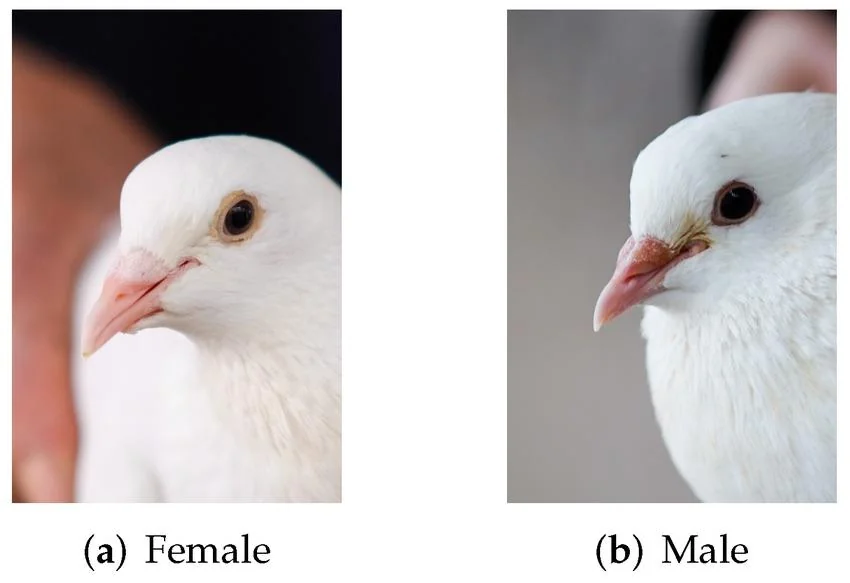
People often ask me about male vs female pigeons when they first start raising birds. At first glance, pigeons can look almost identical. Many beginners expect the male and female pigeons to look very different, but that is not usually the case.
After keeping pigeons for years, I can say that learning the difference between male and female pigeons mostly comes from watching their behavior. When you spend time around your birds every day, small details start to stand out. The way they walk, the sounds they make, and how they interact with other pigeons can tell you a lot.
New pigeon keepers often worry about this question when they plan to start breeding. They want to know if they actually have a pair. They also want to understand how their birds behave inside the loft. Knowing the difference between male and female pigeons helps you manage your birds better and avoid confusion during breeding season.
For example, when a pair starts nesting, the male and female usually work together. The male often brings nesting material while the female arranges the nest. If you do not know which bird is which, it can be harder to understand what is happening in your loft.
Understanding this also helps when you follow a pigeon breeding guide. Breeding pairs behave differently from single birds, and knowing the roles of the male and female makes things much easier.
Another reason this topic matters is the behavior of pigeons. Male pigeons often show strong territorial habits. They puff their chest, walk in circles, and try to impress the female. Female pigeons are usually calmer, but they play a very important role once eggs are laid.
When beginners ask me about male vs female pigeons, I always tell them the same thing. Do not rely only on appearance. Spend time watching your birds. Pigeons show their personality clearly when you observe them every day.
As you continue learning about pigeon behavior, feeding habits, and even topics like what do pigeons eat, you will start to understand your birds much better.
Main Explanation of Male vs Female Pigeons
Many beginners expect male and female pigeons to look very different. In reality, they often look almost the same. When I first started raising pigeons, I made the same mistake. I tried to guess the gender just by looking at them.
After spending time in the loft every day, I learned that behavior tells you much more than appearance does. The best way to understand male vs female pigeons is to watch how they act around other birds.
Size and Body Shape
In many cases, the male pigeon is slightly larger. His body may look strong, with slightly wider hips. The head can also look a bit bigger.
The female pigeon usually has a slightly slimmer body. Her head often looks a little smaller and smoother.
This difference is not always easy to see. Some birds are almost identical in size. That is why I never rely only on body shape to decide the gender.
Head and Neck Behavior
Male pigeons often show more pride in the way they move. When they walk, they puff out their chests and stretch their necks forward. You may notice the feathers around the bird’s neck shining when it turns.
I often see a male pigeon trying to attract a female. He will stand tall and try to look impressive.
Female pigeons usually move more calmly. They walk normally without trying to show off their chest.
Courtship Behavior
Courtship is one of the clearest signs when comparing male vs female pigeons.
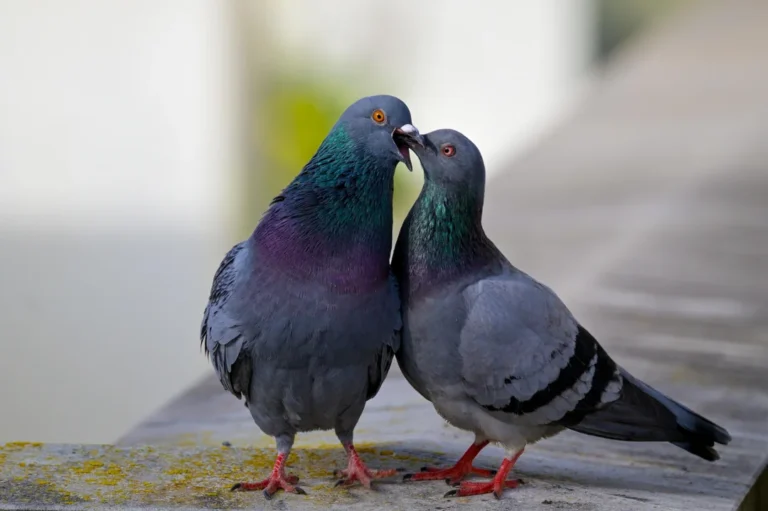
A male pigeon will often follow the female around the loft. He may circle her while bowing his head. You will also hear him making deep cooing sounds.
Sometimes he will spin slowly and drag his tail on the ground. This is a common way male pigeons try to impress females.
The female usually watches this behavior. If she accepts the male, she may stay close to him and allow him to continue the display.
If she is not interested, she may walk away.
Watching this behavior is one of the easiest ways I identify male and female pigeons in my loft.
Nesting Roles
Once a pair forms, their roles become clearer.
The male pigeon often brings small sticks or nesting material. He drops them near the female while she builds the nest.
The female pigeon usually sits in the nest area and arranges the materials.
Both birds will take turns sitting on the eggs after they are laid. This teamwork is something every pigeon keeper notices when learning a pigeon breeding guide.
Voice Differences
Male pigeons usually make louder and more frequent cooing sounds. They use these sounds during courtship or when claiming their space in the loft.
Female pigeons also coo, but their coos are usually softer and less frequent.
When you spend time around your birds each day, you start recognizing these sounds very easily.

Territorial Behavior
Male pigeons often act more territorially. If another bird enters their space, the male may puff up and chase the other pigeon away.
This behavior becomes stronger during the breeding season.
Female pigeons usually avoid fights. They prefer to stay near the nest area.
Understanding these behaviors helps you better manage your loft. It also helps prevent stress among birds, which can sometimes lead to health problems or even pigeon diseases if birds fight too often.
A Simple Tip From Experience
One trick I always suggest to beginners is this.
Watch your pigeons quietly for ten minutes each day. Do not disturb them. Just observe.
Over time, you will notice which bird chases others, which bird builds the nest, and which bird spends more time displaying.
That daily observation teaches you far more about male vs female pigeons than any quick guess.
Tips and Common Mistakes When Identifying Male vs Female Pigeons
When people first start raising pigeons, they often try to figure out the difference between male and female pigeons right away. I understand that feeling. Everyone wants to know if they have a pair or not.
Over time, I learned that patience is the most helpful tool. Pigeons reveal their gender through behavior e specially when they are comfortable in their environment.
Here are some practical tips I often share with beginners who keep pigeons.
Watch Your Birds Every Day
The best advice I can give is simple. Spend time watching your pigeons.
Many pigeon keepers rush to pick up the bird and try to guess its gender by looking at the body. That rarely works well.
Instead, observe how the birds behave in the loft. Within a few days, you will notice patterns.
One pigeon may start cooing loudly and following another bird. That bird is usually the male. The bird being followed is often the female.
These small details become clear when you regularly observe pigeon behavior.
Look For Courtship Displacement Behavior.
Courtship behavior is one of the most reliable ways to identify male vs. female pigeons.
A male pigeon often puffs his chest and walks in circles around the female. He bows his head and makes deep cooing sounds.
Sometimes he spreads his tail slightly and slowly turns while trying to impress the female.
The female usually stays calm and watches the display. If she accepts the male, she will stay close and allow him to continue.
When I see this happening in my loft, I know a pair is forming.
Pay Attention During Nest Building
Nest building is another clear sign.
When pigeons begin preparing a nest, the male usually brings the nesting material. He may carry small sticks or straw in his beak and drop them near the nest area.
The female normally stays in the nest space and arranges the materials.
Watching this teamwork can make it much easier to understand the differences between male and female pigeons.
This stage often appears when you are following a pigeon breeding guide and preparing birds for breeding.
Notice the Difference in Confidence
Male pigeons usually act more confidently. They like to show dominance and may chase other birds away from their chosen space.
Female pigeons tend to behave more calmly. They rarely chase other birds unless they are protecting a nest.
This difference is something I see often when new birds are introduced into the loft.
Common Mistakes Many Beginners Make
One of the most common mistakes is judging gender solely by size.
Some people believe that larger pigeons are always male. That is not always true. I have seen many females that were bigger than the males in the same loft.
Body size can give a small clue, but it should never be the only thing you rely on.
Another Mistake Is Trying to Decide Too Early
Young pigeons can be very difficult to identify.
Before they mature, male and female pigeons behave almost the same. Their behavior becomes oncey as they reach breeding age.
Many beginners try to decide the gender too soon and end up guessing wrong.
It is better to wait and observe the birds as they grow.
Do Not Stress Your Birds
Some people handle their pigeons too much when trying to figure out the gender.
Frequent handling can stress the birds, especially if they are not used to it.
Stress can weaken pigeons and sometimes increase the risk of health problems or certain pigeon diseases.
A calm loft environment helps pigeons express their natural behavior, making identification much easier.
Keep Good Records
One habit that helped me a lot is keeping simple notes about my birds.
If I notice courtship behavior or a pair forming, I write it down. Over time, this helps me tell which pigeons are male and which are female.
This is especially useful when managing several breeding pairs.
Understanding male vs female pigeons becomes easier with experience. The more time you spend observing your birds, the more confident you will become.
FAQ About Male vs Female Pigeons
How can you tell male vs female pigeons apart?
Telling the difference between male and female genitals is difficult if you only look at their appearance. Most pigeons look very similar.
The easiest way is to watch their behavior. Male pigeons often puff their chests, bow their heads, and make loud cooing sounds when trying to attract a female. They may also follow the female around the loft.
Female pigeons usually stay calmer and respond to the male’s display rather than starting it.
After raising pigeons for some time, these behaviors become easy to recognize.
Are male pigeons bigger than female pigeons?
In many cases, male pigeons are slightly larger and stronger in the chest. Their head can also look a little bigger.
However, this is not always reliable. Some female pigeons can be just as large as males. Because of this, size alone should not be used to decide the gender.
Observing pigeon behavior is usually a better method.
Do male and female pigeons both sit on the eggs?
Yes. Both male and female pigeons take care of the eggs.
One thing I notice often in my loft is that the male usually sits on the eggs during the daytime while the female takes the night shift. This teamwork is very common in pigeon breeding.
Watching this routine can help confirm that you have a true pair.
Many beginners notice this when they start following a pigeon breeding guide.
Do male pigeons fight more than females?
Male pigeons are usually more territorial. They like to protect their space and may chase other pigeons away.
This behavior becomes stronger during the breeding season when males compete for females.
Female pigeons are usually calmer and focus more on nesting and caring for eggs.
If the loft becomes crowded, fights between males can sometimes lead to injuries or stress, which may increase the chance of pigeon diseases. Keeping enough space for your birds helps reduce these problems.
Can two male pigeons act like a pair?
Yes, this can sometimes happen.
Two male pigeons may show courtship behavior with each other if no females are present. They may even try to build a nest together.
However, no eggs will be produced. When beginners see this behavior, they may think they have a breeding pair, but later realize that both birds are male.
Watching your birds carefully over time helps avoid this confusion.
Conclusion
Understanding male vs female pigeons takes a little patience. When you first start raising pigeons, it can feel confusing because the birds often look very similar. I remember feeling the same way when I began keeping pigeons. I kept trying to guess the gender by looking at them, but that rarely worked.
The real answer comes from watching your birds.
Male pigeons usually show stronger behavior. They puff their chest, bow their head, and make loud cooing sounds to attract a female. They also tend to chase other pigeons away from their space.
Female pigeons usually act calmer. They respond to the male’s display and later take an important role in building the nest and laying eggs.
Once you start noticing these patterns, identifying male vs female pigeons becomes much easier.
Spending time observing your loft every day is one of the best habits a pigeon keeper can develop. You will begin to understand your birds better,n ot only by learning the differences between males and females, but also by studying pigeon behavior, breeding habits, and even daily routines, such as what they eat.
This experience also becomes very helpful when you start breeding pigeons or following a proper pigeon breeding guide. Knowing your birds helps you manage pairs, protect eggs, and keep the loft peaceful.
Raising pigeons is not just about feeding them and cleaning the loft. It is also about paying attention to how they live and interact with each other. The more time you spend observing them, the more you will learn.
With time, telling the difference between male and female pigeons will feel natural. It becomes part of everyday life in the loft, just like checking the nests or watching the young birds grow.
For beginners, the most important advice is simple. Be patient, observe your birds, and enjoy the learning process. Pigeons reveal a lot about themselves when you take the time to watch them closely.

Barbara Allen is a writer and chaplain at Lort Smith Animal Hospital in Melbourne, Australia. She is the author of the book Pigeon, which explores the cultural and historical relationship between humans and pigeons. Allen has also written the picture book I Was There and contributed to publications such as Peace of Mind and Uniting Church Studies.
One Comment